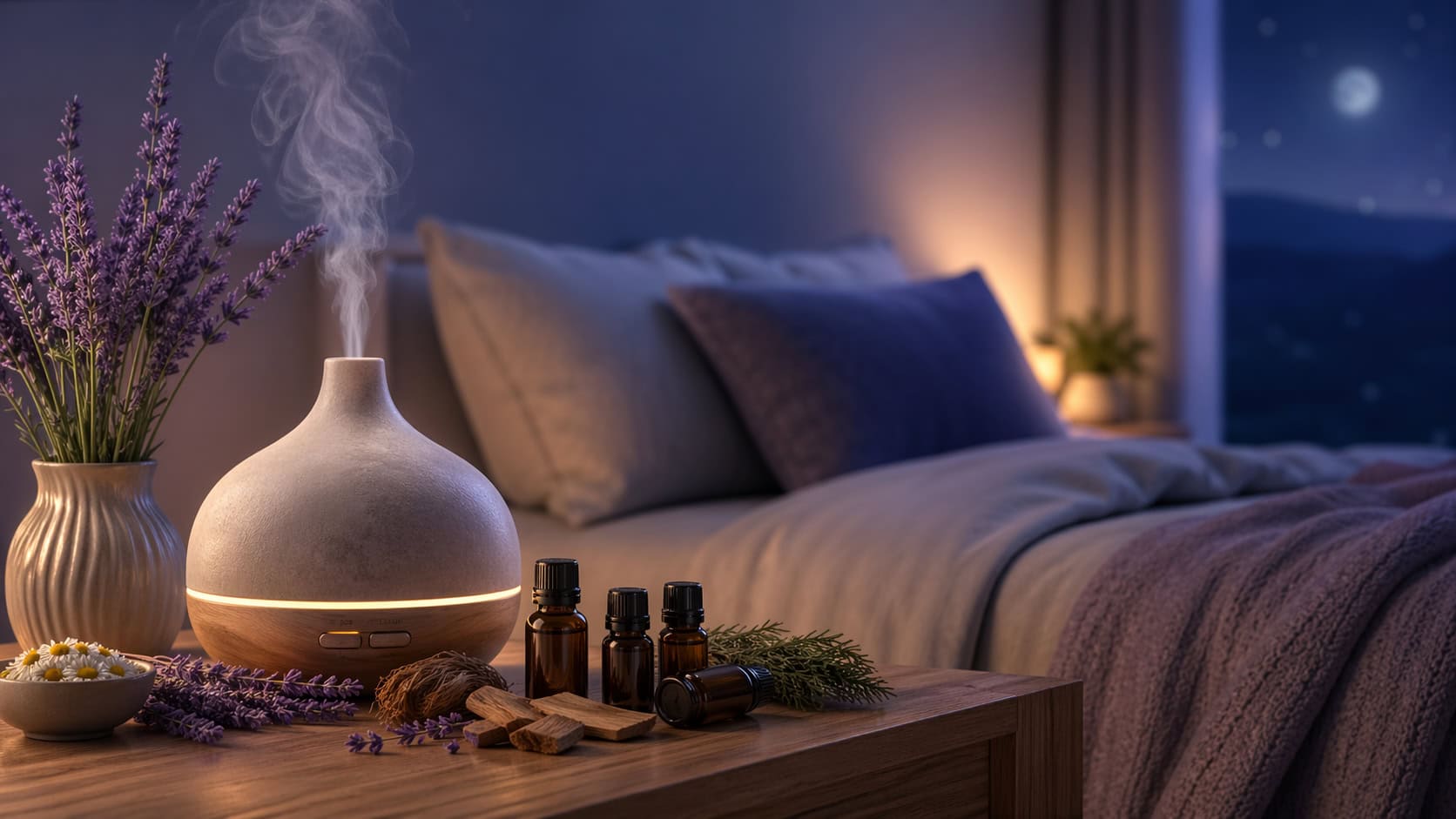
If you’ve been lying awake counting sheep (or scrolling your phone), you’re not alone. More than a third of American adults don’t get the recommended seven hours of sleep per night. And while there’s no magic bullet for insomnia, essential oils are one of the few natural approaches with genuine research behind them.
A 2024 meta-analysis of 11 randomized controlled trials (628 participants) found that lavender essential oil had a statistically significant positive effect on adult sleep quality (Holistic Nursing Practice, 2026). That’s not a guarantee of results, but it’s a meaningful body of evidence that aromatherapy can genuinely help.
This guide ranks the best essential oils for sleep based on research, traditional use, and practical effectiveness. For each oil, you’ll get specific instructions on how to use it, what to expect, and who it works best for.
Important: Essential oils are not a replacement for good sleep hygiene. If you have chronic insomnia or a sleep disorder, consult a healthcare professional. Oils work best as part of a broader sleep routine, not as a standalone solution.
The Best Essential Oils for Sleep, Ranked
1. Lavender – The Gold Standard
Why it’s #1: More research on sleep than any other essential oil. Multiple systematic reviews and meta-analyses support its use. Works through GABA receptor modulation via its primary compound, linalool.
Best for: General sleep improvement, difficulty falling asleep, sleep anxiety, establishing a bedtime routine.
How to use it:
- Diffuse 3-4 drops 30 minutes before bed
- Apply 1-2 drops diluted to the bottoms of your feet
- Place 1 drop on your pillowcase (test a small area first)
- Bedtime bath: 5-6 drops + 1 cup Epsom salts
What to expect: Subtle calming effect within 15-30 minutes. Most people notice improvement within the first few nights, with benefits building over 1-2 weeks of consistent use.
Read our complete Lavender guide →
2. Vetiver – The Deep Grounding Oil
Why it ranks high: Vetiver’s heavy sesquiterpene compounds create a uniquely sedating effect that many people find more powerful than lavender for stubborn sleeplessness. Its base-note aroma persists through the night rather than fading after an hour.
Best for: Racing mind, overthinking at bedtime, restlessness, people who don’t respond well to lighter floral oils.
How to use it:
- Apply 1-2 drops diluted to the bottoms of feet before bed
- Diffuse 2 drops vetiver + 3 drops lavender (don’t overdo vetiver, it’s strong)
- Roll-on blend: 3 drops vetiver + 3 drops lavender + 10mL fractionated coconut oil
What to expect: Noticeable grounding and mental slowing within 10-20 minutes. Vetiver is best for people whose sleep issues come from an overactive mind.
Read our complete Vetiver guide →
3. Cedarwood (Juniperus virginiana)
Why it works: Cedarwood contains cedrol, a sesquiterpene alcohol that research suggests may have sedative effects. Its warm, woody aroma promotes feelings of security and comfort.
Best for: People who prefer woody scents over floral ones, children (properly diluted), creating a cozy bedtime atmosphere.
How to use it:
- Diffuse 3-4 drops alone or with lavender
- Apply 1-2 drops diluted behind the ears and on the back of the neck
- Combine 2 drops cedarwood + 2 drops lavender + 1 drop vetiver in the diffuser
Read our complete Cedarwood guide →
4. Roman Chamomile (Anthemis nobilis)
Why it works: Known for its gentle, apple-like scent and calming properties. A small 2021 study found chamomile essential oil significantly improved sleep quality in university students with poor sleep.
Best for: Children (one of the gentlest oils), people sensitive to strong scents, anxiety-related sleep issues, bedtime for the whole family.
How to use it:
- Diffuse 3-4 drops in children’s rooms 30 minutes before bedtime
- Combine with lavender for amplified calming effect
- Apply 1 drop diluted to the chest or wrists
Read our complete Roman Chamomile guide →
5. Frankincense – The Mind-Quieter
Why it works: Frankincense slows and deepens breathing naturally, which shifts the nervous system toward rest. An animal study found frankincense essential oil reduced stress hormones and helped counter the effects of sleep deprivation.
Best for: Bedtime meditation, spiritual practice before sleep, calming an anxious mind, people who like resinous/warm scents.
How to use it:
- Diffuse 3 drops frankincense + 2 drops lavender
- Apply 1 drop to the crown of your head before bed
- Inhale from palms for 60 seconds while breathing slowly
Read our complete Frankincense guide →
6. Ylang Ylang (Cananga odorata)
Why it works: Ylang ylang’s exotic, floral aroma has been shown to lower blood pressure and heart rate, both of which help the body transition into sleep mode.
Best for: People who enjoy sweet, exotic scents, romantic bedtime atmosphere, blending with other sleep oils.
How to use it:
- Use sparingly (1-2 drops in the diffuser, it’s strong)
- Blend: 1 drop ylang ylang + 2 drops lavender + 2 drops cedarwood
- Apply 1 drop diluted to the inside of wrists
Read our complete Ylang Ylang guide →
7. Bergamot (Citrus bergamia)
Why it works: Unusual among citrus oils because it’s calming rather than energizing. Research suggests bergamot may lower blood pressure and improve mental health, creating conditions conducive to sleep.
Best for: People who find earthy/woody scents unappealing, those who want calming without heaviness, anxiety-related sleep issues.
How to use it:
- Diffuse 3-4 drops in the evening
- Combine with lavender and cedarwood
- Apply diluted to the bottoms of feet (photosensitive, so avoid sun, but that’s not an issue at bedtime)
Read our complete Bergamot guide →
How to Build a Bedtime Essential Oil Routine
The key to getting results from essential oils for sleep isn’t just choosing the right oil. It’s using it consistently as part of a routine. Your brain learns to associate the scent with sleep, creating a conditioned response that makes the oil increasingly effective over time.
A simple bedtime routine:
- 30 minutes before bed: Turn on your diffuser with your chosen oil or blend. This signals to your brain that it’s time to start winding down.
- 15 minutes before bed: Apply 1-2 drops of your chosen oil (diluted) to the bottoms of your feet. The feet have large pores and absorb oils efficiently.
- In bed: Take 5 slow, deep breaths. Inhale for 4 counts, hold for 4 counts, exhale for 6 counts. The extended exhale activates your parasympathetic nervous system.
- Consistency: Use the same oil or blend every night for at least 2 weeks before evaluating whether it’s working. Switching oils nightly prevents the conditioned response from forming.
Our Favorite Sleep Diffuser Blends
The Classic: 3 drops lavender + 2 drops cedarwood
Deep Rest: 2 drops vetiver + 3 drops lavender + 1 drop Roman chamomile
Grounding Sleep: 2 drops frankincense + 2 drops cedarwood + 1 drop ylang ylang
Sweet Dreams: 2 drops lavender + 2 drops bergamot + 1 drop cedarwood
Child-Safe (ages 2+): 2 drops lavender + 1 drop Roman chamomile (well-ventilated room, 30 minutes only)
Tips for Better Results
Do:
- Use your diffuser on a timer (30-60 minutes, not all night)
- Keep the room cool (65-68 degrees is optimal for sleep)
- Combine oils with other sleep hygiene practices (consistent bedtime, dark room, no screens)
- Store your “sleep oil” separately from your other oils so the act of getting it out becomes part of your routine
Don’t:
- Diffuse peppermint, rosemary, eucalyptus, or lemon before bed (these are stimulating)
- Use more drops, thinking it will work better (more can actually be counterproductive)
- Expect instant results (give any oil at least 2 weeks of consistent use)
- Use peppermint or eucalyptus in children’s bedrooms (not safe for kids under 6)
When Essential Oils Aren’t Enough
Essential oils are a complementary tool, not a medical treatment. If you experience any of the following, consult a healthcare professional:
- You consistently can’t fall asleep within 30 minutes of getting into bed
- You wake up multiple times per night and can’t get back to sleep
- You feel exhausted during the day despite spending enough time in bed
- You snore loudly or stop breathing during sleep (potential sleep apnea)
- Your sleep issues have lasted more than a month
These may indicate a sleep disorder that requires professional evaluation.
Frequently Asked Questions
Which essential oil is best for sleep?
Lavender has the most research behind it and works for the widest range of people. If lavender alone isn’t enough, try adding vetiver or cedarwood to deepen the effect. Some people respond better to woody scents (vetiver, cedarwood, sandalwood) than floral ones (lavender, chamomile). Experiment to find what works for your body.
Can I leave my diffuser running all night?
It’s not recommended. Running a diffuser all night can lead to overexposure, cause headaches, and reduce the oil’s effectiveness over time (your nose stops registering the scent). Use a 30-60 minute timer and let the residual aroma carry you through the night.
Are essential oils safe to use around children at bedtime?
Some oils are safe when used appropriately. Lavender and Roman chamomile are among the gentlest options for children. Avoid peppermint, eucalyptus, and rosemary for children under 6. Always dilute, use short diffusing sessions in well-ventilated rooms, and start with small amounts. See our Essential Oils for Children safety guide for age-specific guidance.
Can I use essential oils with melatonin or sleep medication?
Essential oils are generally considered safe alongside melatonin. However, if you take prescription sleep medication, consult your healthcare provider before adding aromatherapy, as some oils have mild sedative properties that could theoretically interact with sedating medications.
How long does it take for essential oils to help with sleep?
Some people notice a difference on the first night, but the full benefit typically develops over 1-2 weeks of consistent use. The conditioned response (your brain associating the scent with sleep) strengthens over time, making the oils increasingly effective.
Get Our Free Essential Oils Reference Guide
A printable quick-reference card covering the top 25 essential oils with their primary uses, dilution ratios, and safety notes. Includes a dedicated sleep section.
[Beehiiv signup form will be embedded here]
Our Top Picks for Sleep
If you're building a sleep essential oil collection, we recommend starting with lavender and cedarwood. These two oils cover most people's sleep needs and blend beautifully together.
See Our RecommendationsSave 25% with a wholesale accountWe may earn a commission if you purchase through our links.